Curses!
My Sailor's Mouth Gets Me In Trouble

I’ve been thinking a lot about the reaction one of my cousins had to my use of the F-word on my account at BlueSky, where I post almost exclusively about politics. When we were last talking she admitted, like it was some guilty pleasure, that she followed me there, but said, “It’s hard for me to like you when you’re dropping F-bombs.” That didn’t surprise me, as we’ve taken very divergent political and religious paths in our old age. I’ve turned into a democratic socialist agnostic and she’s, well, not MAGA but a deeply conservative evangelical.
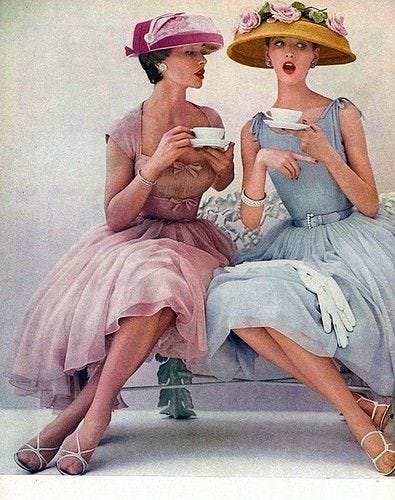
So it wasn’t a surprise, but hard not to read it as an attempt to both shame me and control my speech, which is downright hilarious, considering our ages. We’re both retired; she’s an old lady and I’m a crone (nobody’s ever called me a lady, in any context). I really hope she wasn’t thinking that I’d stop using “fuck” as an adjective or adverb or imprecation just because she might not like me anymore. She’s known me long enough that it ought to be apparent I’ve entered the No Fucks to Give Stage of life. I mean, having a mouth like a sailor is both a right and a choice. As the kids say, I chose violence. And I have thoughts about swearing. I taught writing and grammar for too many years not to.
The general use of what we call “swear words” is not, as some people think, lazy speech or a lack of vocabulary, especially not for me. I’ve been a writer and poet since I was in middle school and have an intimate and loving relationship with words that non-writers don’t often have, which probably includes a bit of synesthesia. Words have a texture and shape to me, what foodies call a “mouth feel.” I’ve never liked the popping sound of words that begin with or contain the letter “p.” But I do like the good, hard Anglo-Saxon consonants, especially the “k” at the beginning of my last name, or the hard “c” in the word “cunt.”
But it’s not just the sound and shape and feel that I love about English. It’s the vast vocabulary and the shades of meaning English has collected over the millennia of its vocabulary thievery and transformations. One of the first things I always told my writing students was that English has a word hoard (as the Anglo Saxons called it) of about a half-million words, that’s growing all the time. Even really intelligent, well-spoken people only use a fraction of that, and we all have our favorites that we use repeatedly, consciously or unconsciously.
And the beauty of English is not just in the wide selection, but the flexibility of the language itself. We’re not afraid to make verbs of our nouns—much as that annoys the prescriptivists (contact); or make up entirely new words from acronyms or whole cloth (laser); or completely change the meaning of old, established words (terrific); or invent new slang each generation (groovy), or shamelessly steal whole words from people with different native tongues (déjà vu). English is a dog’s breakfast of grammatical “rules” riddled with exceptions and vocabulary stolen from the Greeks, Romans, Vikings, Angles, Saxons, French, Germans, and anybody else who got in the way and brought delicious food with them. Because that’s where it always starts: “Mmmmm, what’s this dish?” And yes, that is a shameless pitch for immigration.
Part of that flexibility is the change of meaning and emotion over history. Sometimes that’s due to the eventual standardization of spelling and development of dictionaries. This is one reason I love the Oxford English Dictionary, the venerable OED, because it traces all those different spellings and meanings through time. For instance, the earliest use of the word “fuck” was as a name, in the 1310 Chester County Court Plea Rolls: one Roger Fuckebythenavele. It appears in 1278 as another name, John le Fucker, “but this likely could be just a different spelling for the word ‘fulcher’ which means soldier.” I won’t give you the whole history of the word, but the Wikipedia article has a fine and well-researched description of it. Warning: you may come away from that realizing that “fuck” is just another utilitarian word from the Middle Ages.
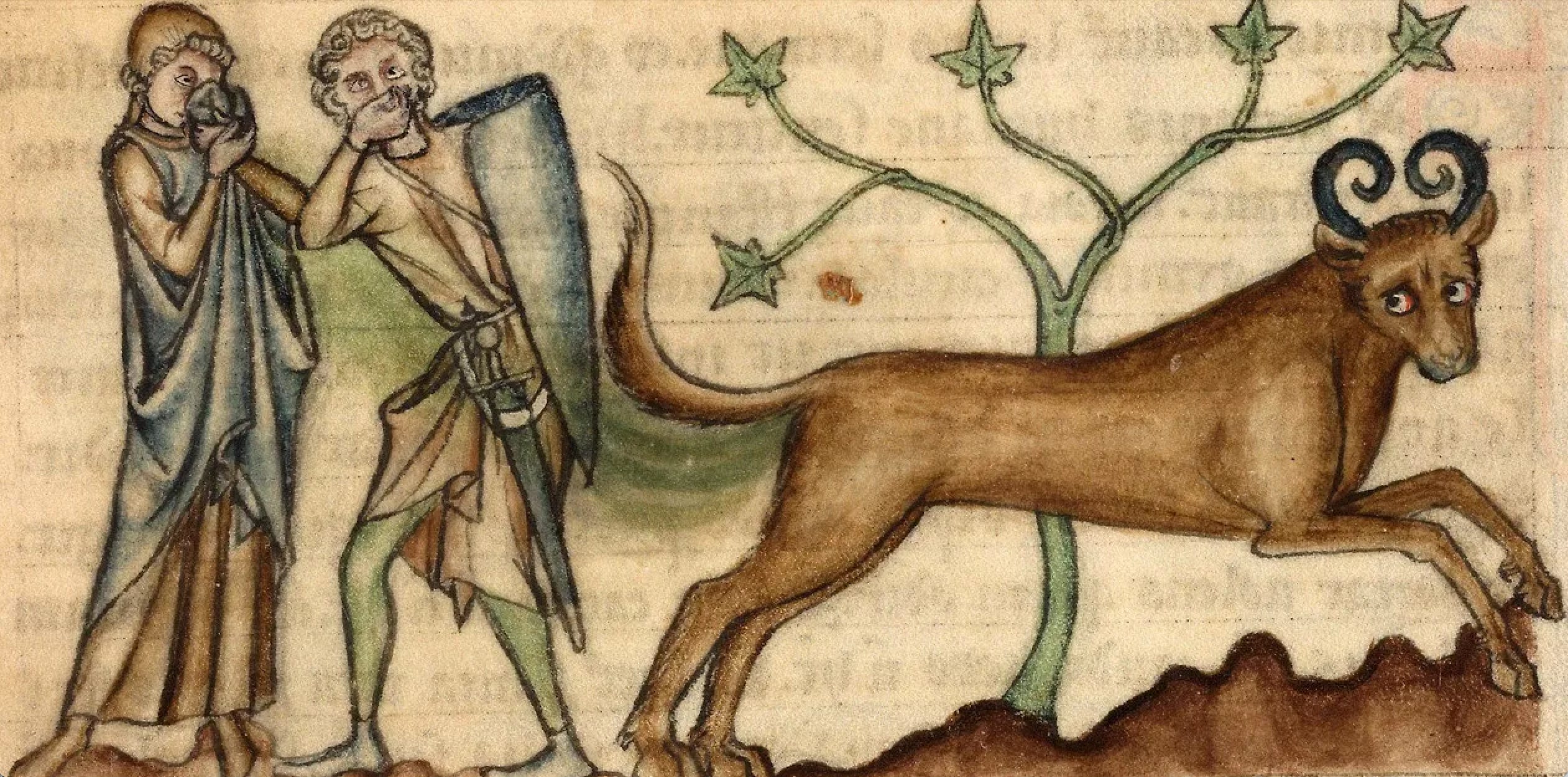
I’ve always loved the medieval period for its forthright bawdiness about human bodies. The literature is unabashedly replete with fart jokes, bathroom humor, and a refreshing matter-of-factness about sex and bodies, despite the heavy presence of monks and nuns and priests. I suspect that’s because it was a largely agrarian world, where farm animals eat, excrete, and make and have babies right out there in the open for all to see. Part of the modern pleasure in the presence of such words is in tweaking the nose of the uptight right there in the classics that every educated person should be familiar with. My favorite story about my undergraduate Chaucer professor, who made us read and learn to pronounce his work in the original Middle English, is her parting words of advice on the first day: “If you run across a word that you think looks like ‘cunt,’ it is.” Scandalous!
All that said, there’s no denying that words are emotionally loaded, sometimes regardless of their context, but the reason why we’re offended by certain words is absolutely cultural and shifts over time. If your culture is not generally embarrassed by the functions of the human body and not misogynist, those words referring to sex and male and female body parts or gender are going to have less effect when they’re spoken or written. Since that’s not the culture we live in, “fuck” and “cunt” and “bitch/son of a bitch” and “asshole” and “dick” and “shit” have a certain potency when tossed into the conversation. But they’ve also become far less taboo in the last couple of decades, far more common in public speech like movies and novels, and thus less, shall we say, puissant.
Anyway, you can probably see why I’ve never had an aversion to so-called vulgar words. For one thing, I find the whole notion of vulgarity offensively classist, as it was meant to be, developed in a land where your accent can be held against you like a crime. In that world, common people with particular accents are vulgar, and rich people with a uniform, educated, and artificial (in some cases) accent are refined, supposedly. I think the newly coined term The Epstein Class gives the ultimate refutation to that idea. The vulgarity label has long been a tool of misogyny, too, to keep women under control with shame. Cf. Sargent’s portrait of Madame X. Anyway, I’ve always identified with the commoners.
Finally, the personal—including the use of language—is also political. I’m beginning to see my cousin’s criticism of my free use of the word “fuck” and its derivatives as an example of the fundamental difference between her worldview and mine in the personal arena, and between conservativism (ultra and right-leaning especially) and liberalism/progressivism in the macrocosm. The primary difference in this case is not so much ideology as it is the fear of change and difference, and loss of control. Conservative pundit Russell Kirk describes it as an adherence to “custom, convention, and continuity,” regardless of how harmful that custom or convention might have been to anyone not a wealthy white male. In a world where only men have traditionally held power, that makes conservatism’s core value misogynistic, and where that power has been abrogated to white men alone, racist as well. Regardless, there is a sense in conservatism that some people are better and more deserving than others, whether it’s based on race, gender, or income. Liberals and progressives, by contrast, generally like and want change, with an emphasis on the improvement of living conditions for everyone, especially the poor. Think FDR’s New Deal, Johnson’s Great Society, the civil rights and labor movements, feminism, antifa. Gross simplification in both cases, but useful for the argument.
One of the ways conservatism is enforced is via the suppression of free speech and the imposition of taboos on particular words, to maintain what Kirk calls “an enduring moral order.” I won’t belabor that point, as it’s too obvious from the previous analysis of what George Carlin so cleverly illustrated as the “Seven Words You Can’t Say on TV.” (Part of my delight in Carlin’s performance of this bit is his sheer joy in language in general. Probably where I got part of mine, too.) The real point I want to make here, on the personal level, is about why I’m so free with the f-bombs, particularly on BlueSky—because it’s not random. It’s a deliberate choice.
It’s because the people cooperating with and running this regime deserve it.
The regular mocking and disrespectful names don’t have enough punch. “Fascist” alone isn’t vicious enough for a group of public servants turned wannabe rulers who are killing fishermen with missiles in the Caribbean; who invaded Venezuela, kidnapped their leaders, and left a puppet government in place, then invaded Iran and massacred their leaders and 142 schoolgirls; who invaded Los Angeles, Chicago, Minneapolis, and points in between with a secret police force to violently kidnap productive, law-abiding but undocumented members of society and kill or put them in massive concentration camps modeled on Nazi Germany’s, and teargas and kill citizens trying to protect them; who are currently trying to disenfranchise a large fraction of U.S. citizens; who sucks up to tyrants and openly supports a genocide in Gaza under the guise of self-defense—and so much, much more. Simply using the descriptive nouns for eugenicists, grifters, white supremacists, liars, convicted criminals, outright Nazis, insurrectionists, misogynists, bigots, quacks, drunks, rapists, and arrogant men who believe they are superior to the rest of us doesn’t begin to convey the contempt and rage I feel for the men and women destroying the justice system, state-supported science, governmental infrastructure, democracy, and the lives of people who aren’t exactly like them. I cannot find enough truly vile words to describe them. “Fucking fascist assholes” doesn’t begin to cover it.
I could rant on about the perfidy, but I won’t. It’s all public. Suffice to say that throughout my postings on BlueSky, I save my most taboo and most vile vocabulary for the people and actions who’ve earned it. I curse them and I curse their actions in the same way that old crones always have. May they rot in hell before they wreck the country and it’s beautiful variety of people I’ve grown to love. The last thing I want is to be nice to or liked by any fucking bigot who supports this kind of body-, soul-, and democracy-destroying regime.
And if that foo shits, cousin, wear it.